I design and build production software where architecture, data, and interface behavior are tightly
connected—from multi-tenant operational platforms and accessible maps to WebGL/WebGPU tools and
browser-native technical applications.
My recent work uses SvelteKit and TypeScript, supported by Node, PostgreSQL, Python services, testing, and
documented delivery. I am most useful when a team needs senior ownership of both the product surface and
the system underneath it.
Built and modernized production systems with multi-tenancy, roles, and operational workflows.
Designed reusable visualization and mapping systems for Nesta UK.
Led frontend architecture and a four-developer team.
Built open-source WebGL/WebGPU and computational design tools.
How I work
I take on full-time roles, contract engagements, part-time technical advisory, and fractional architecture /
technical-lead work, including occasional Fractional CTO engagements when that fits. I work remotely across the Americas and
Europe. I'm strongest where architecture, product delivery, and rich interfaces intersect: finance and
regulated-operations systems, data-rich products, and AI-augmented engineering workflows.
Comfortable owning delivery end to end or plugging into an existing team as a senior individual contributor
or lead.
Best-suited roles
These are the roles where I am most useful. I also consider fractional CTO or advisory engagements when
the work needs both technical direction and hands-on product judgment.
Staff / Principal Product or Frontend EngineerFor teams needing strong frontend architecture, technical product judgment, and production ownership.
This site is a deliberate craft exercise: lean semantic HTML, clear separation of structure from
presentation and behavior, and performance-aware implementation. A dedicated print stylesheet drops the
interactive background and reflows the content into a paper-ready CV if you print this page — progressive
enhancement that keeps one content model for screen and print. For a shareable HTML résumé, PDF download, or
print without the panel UI, use the Résumé page. It reflects the
same care I bring to client and product work, applied here as a long-running personal build.
Thanks for visiting — the sections below expand on experience, skills, selected work, and earlier
experiments. Analytics here are cookieless and collect no personal data; details in the privacy notice.
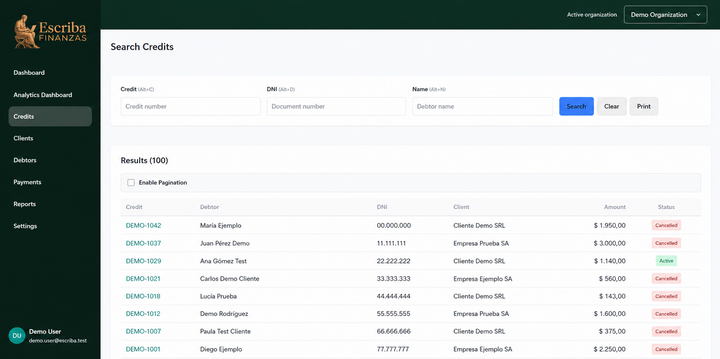
Commercial multi-tenant platform for legal-finance credit operations — credits, debtors, payments, and legal case files — modernizing a long-running Classic ASP system. Team-scoped data isolation via PostgreSQL RLS, roles and invitations, with automated migration validated against the live legacy system.
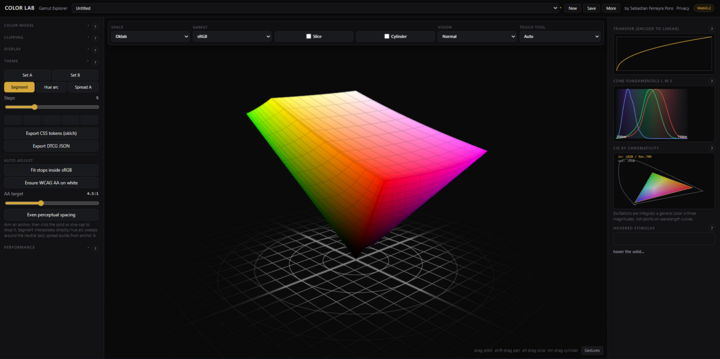
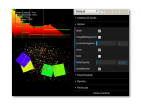
Browser-based gamut explorer: orbit sRGB through Rec.2020 as interactive 3D solids, slice on arbitrary planes, trace stimuli through OETF and chromaticity readouts, and export perceptual theme ramps as CSS or DTCG tokens.
Browser-native engineering design system (independent research)
A browser-native engineering design system combining parametric geometry, aerodynamics, visualization, and model-backed analysis. Editable wing and airfoil geometry, station-based lofting, NeuralFoil-backed estimates, dirty-section caching, and mission scoring share one model for domain specialists.
Data visualization & open-source tooling (Nesta UK)
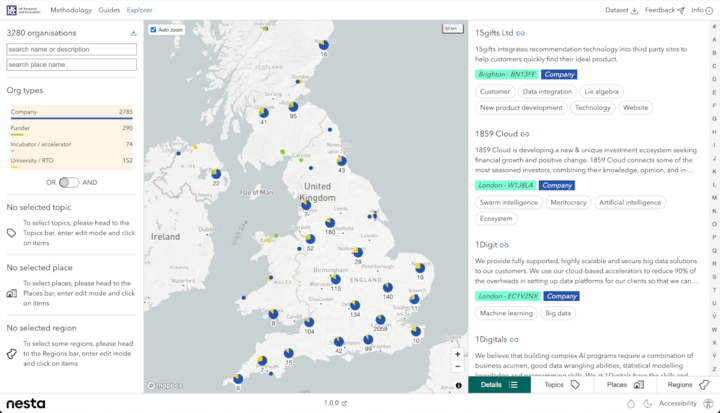
Reusable visualization and mapping systems for policy and research audiences: Dapsboard aggregate explorers, WAIfinder organisation–topic graphs, BEIS indicators geography, Svizzle building blocks, accessibility-minded UI, and open-source delivery across international remote collaboration.
End-to-end independent site for a residential development: commercial awareness, performance-sensitive presentation, and a lead-generation contact path — a compact commercial delivery example alongside larger production platforms and data systems.
Stack. SvelteKit, TypeScript, photogrammetry-informed 3D hero, contact pipeline, Node deployment
Need a delivered product or a team, not just an individual hire? These commercial projects ship through my
engineering practice, Infomerx Engineering Solutions — full case studies and
capabilities at infomerx.co →
Selected writing
Technical writing and selected long-form essays on software, systems, time, consciousness, and
physics-informed metaphysics. Full text of older engineering posts is linked from the archive
below; selected recent pieces are on Substack as normal outbound links.
Why characters across and lines down tell you more about whether a text-heavy layout still works than viewport pixels, and how Svizzle measured that directly instead of guessing from screen width.
Building Svizzle's accessibility menu with Luca Bonavita: root-relative font scaling, filter-based color-vision controls, and the motion category we left out because the products barely used it.
The Java Collections API in java.util.* is a very powerful and fundamental toolkit for managing sets of objects and is used in practically all facets of software development, from low-level caches, to O/R mapping, to GUIs.
However, occasionally we have needs that extend beyond the basic functionality provided in the API. One very common need not handled by the collections framework is to provide maps that can hold many values for a particular key, much like databases feature non-unique key indexes. Having such a collection class would make this job very simple in Java.
Internet Archive · 2000s
· JavaLobby, Wayback
Internet Archive snapshot; the original JavaLobby forum is offline.
Sometime ago I posted some code which ranks names according to their similarities based on Levenshtein's word difference algorithm. In this article I mentioned I had developed an algorithm to encode names quasi-phonetically according to their pronounciation in Spanish, much in the spirit of Soundex and Metaphone.
Since then, I've received a few requests by email with respect to this algorithm so I think it would be good to answer them all in a single Java Tip, while simultaneusly showing how to use Regular Expressions efficiently in Java.
Internet Archive · 2000s
· JavaLobby, Wayback
Internet Archive snapshot; the original JavaLobby forum is offline.
Although the java.util.LinkedList class included in the JDK is good enough for most cases requiring linked lists, sometimes conditions will arise when it might not be as useful.
Here I propose an alternative implementation using a combination of generics and inheritance optimized for better memory economy and possibly a slight increase in speed, although the latter should be barely noticeable. This example will also illustrate some interesting applications of generics.
To understand where I'm coming from I'll need to explain some things about how Java stores objects in the heap and how this affects the standard LinkedList implementation.
Internet Archive · 2000s
· JavaLobby, Wayback
Internet Archive snapshot; the original JavaLobby forum is offline.
As I undertake my first project management role, where I'll be leading a really small group of 3 developers (myself included) into an agile development effort, I'm allowing myself to look at all the unconventional technologies on the look out for interesting innovations before the design is completely fixed. I will however keep a conservative attitude so as not to get too excited about the toys to be found out in the wild (wild toys might eat your project and your budget!).
Internet Archive · 2000s
· JavaLobby, Wayback
Internet Archive snapshot; the original JavaLobby forum is offline.
Using the previously posted Levenshtein Edit Distance method, this one builds upon the functionality to provide a name similarity ranking.
The benefits it provides over using plain LD is that it is indifferent to the order a person's name is written, thus being very useful for sorting results of name searches.
Internet Archive · 2000s
· JavaLobby, Wayback
Internet Archive snapshot; the original JavaLobby forum is offline.
Here's a small implementation of the Levenshtein Word Distance algorythm written in Java.
The algorythm is good for measuring edit distance between two words and is normally used for spell checking and similarity sorting, but I've been told it can be used for other things as well. If you want some in depth explanation of how it works check out this site or this one that has a nice little applet showing its internals at work.
Internet Archive · 2000s
· JavaLobby, Wayback
Internet Archive snapshot; the original JavaLobby forum is offline.
JDesktopPane as it is doesn't provide tiling and cascading. Here's the routine for tiling. Its priority is to get as many windows as possible to have the same size. Here's the code cascading windows.
Internet Archive · 2000s
· JavaLobby, Wayback
Internet Archive snapshot; the original JavaLobby forum is offline.
JDesktopPane as it is doesn't provide tiling and cascading. Here's a simple routine for cascading.
The code is implemented in static methods for simplicity but some might prefer to include the methods in a subclass of JDesktopPane or a DesktopManager.
Internet Archive · 2000s
· JavaLobby, Wayback
Internet Archive snapshot; the original JavaLobby forum is offline.
Following the recent Java2D discussion some of you might be wondering how to put some of that information to good use. A deeper understanding of why TexturePaint results in lower preformance can be found in that thread.
Here's a simple way to paint an arbitrary Java2D Shape with a texture using all the hardware acceleration the current rendering pipelines can provide. This routine, although still having lots of room for important optimizations, is a lot faster than ye' old TexturePaint.
Internet Archive · 2000s
· JavaLobby, Wayback
Internet Archive snapshot; the original JavaLobby forum is offline.
Woa! Don't fire up those flame-throwers just yet! This isn't a thread about why native code is better, etc, etc. I mean to say that Java2D could fly just using better Java code.
Take Color, GradientPaint and TexturePaint and the low-level pipelines that actually paint stuff with these classes for example. Here are three implementations of the Paint interface that really make me wonder what's going on over at Sun.
Internet Archive · 2000s
· JavaLobby, Wayback
Internet Archive snapshot; the original JavaLobby forum is offline.
Modern reboot and expansion of a legal-sector credit-operations system originally delivered in
1999–2002. Rebuilt as a commercial multi-tenant web platform using SvelteKit 2, TypeScript, PostgreSQL
row-level security, and Drizzle ORM. Covers credit portfolios, legal cases, payments, reporting, team
invitations, role-based access, and migration from a legacy Classic ASP estate. Includes structured
documentation, Vitest and Playwright coverage, and an engineering-first delivery process. Commercial
product in active development.
2024-Present / Personal R&D — Multifractal Time-Series Prediction Platform
Monorepo research platform combining a SvelteKit frontend, Python ML engine, and custom C++/Rust
shared-library resamplers for multiscale time-series tensor generation. Designed a recency-weighted
temporal representation that preserves high-resolution recent samples while folding lower-resolution
long-horizon context into fixed-shape 3D training blocks. Implemented geometric bin-width ladders,
stacked resampling windows, timeline-coupled time encodings, and DSI/multifractal analysis to guide
segmentation and view construction. Built feature pipelines generating difference, tangent, and
outer-product matrix channels to encode cross-channel structure before modeling. Python stack includes
Hydra, Optuna, TensorFlow/Keras, pytest-benchmark, unit tests, experiment workflows, and documentation.
Benchmarks on large training-style batches show ~20–40× throughput over a NumPy-first reference path,
keeping preparation tractable for series with millions of samples. Independent upskilling project, not
commercial product scope.
2024–Present / Independent Web Development
Independent Svelte/ SvelteKit web development for production sites and promotional platforms. Example: Aires de Río — a residential
development website built with TypeScript, SvelteKit, server-side contact
handling, Node-based deployment, and custom 3D/photogrammetry-based hero visuals. Focused on polished
frontend execution, interactive presentation, performance, and deployment-ready delivery.
2020-2024 / Frontend and Dataviz Developer
Frontend and dataviz developer using Svelte/SvelteKit, XState and Lamb to develop
accessible data vizualization frameworks, tools and websites. Nesta UK, London.
2019-2020 / Frontend Team Lead
Frontend development team lead managing four devs, frontend architect and backend
developer for a CRM system using React on the frontend and a
Python/Flask/SqlAlchemy/PostgreSQL stack on the backend publishing
a REST API service. GoManzanas, Palo Alto, CA.
2016-2017 / CTO, Technical Project Manager and Software Architect
Project manager for Infomerx developing web based administrative systems and
applications. Tasks involved deciding the technology roadmap, hiring, training, directing
& maintaining a development team, interacting with sales & marketing and designing the
architecture of the system based on commercial and technical requirements. Technologies
used included Three.JS, Node.JS, React.JS, Socket.IO and various others.
2015-Present / Participation in Interactive Arts Collective
Visual experimentation, live coding performances with live musical bands and interactive
installations in Santiago del Estero. Tripulantes, Casa Nave, Santiago del Estero, Argentina.
2015-2016 / Web Technologies Workshops for Artists
Organization of educational workshops teaching web technologies like HTML5, CSS and
Javascript for contemporary and conceptual artists. Casa Nave, Santiago del Estero, Argentina.
2013-2015 / Technical Project Manager and Software Architect
Project manager for Ensembleweb developing a gameification
based website for enhancing engagement and performance in sales workgroups for EnsembleWeb,
a Canadian web site development company. Tasks involved hiring, training, directing & maintaining
a development team, interacting with marketing and designing the architecture of the system
based on commercial and technical requirements. Technologies used included Node.JS, Angular.JS,
React.JS, Socket.IO EnsembleWeb
2010-2014 / Wordpress Plugin Development
Consulting, custom plugin design and development for EnsembleWeb, a Canadian web site
development company. EnsembleWeb
2008-2013 / Graphic Design & Technical Consulting
Graphic design, CGI imaging, technical consulting & special purpose software development
for Expressart, an advertising agency based in Santiago del Estero, Argentina.
Expressart
2007 – 2008 / Team Leader & Software Development
Development of software tools for the human resources industry including design
implementation and developer team coordination. The system, based on modern architectural
design, provides a sophisticated desktop user interface but accesses distributed web
services under the hood thus providing a complete user experience while still reaping the
benefits of SOA (Service Oriented Architectures). Responsibilities included maintenance
of the various servers running in the system, of the promotional web site and the
authorship and maintenance of source code in Java, C# 2.0, HTML and SQL for software
destined to run on Windows and Linux. CandidateHunter International
2003-2006 / Project Management & Software Development
Funding and managing a 3-person team in the development of an object oriented graph database
engine and its supporting developer and management tools for Microsoft’s .NET environment
and Sun’s Java platform. This OODB was my design and is intended to support nearly orthogonal
data-persistence facilities for data objects in these platforms. Features being developed
include ACID transactions, multi-server distributed storage nodes and data versioning for
the purposes of auditing and conflict-resolution.
2004-2005 / Website Content Editor
Front-page story editor for JavaLobby.org, a website specializing in the Java developer
community. The main responsibilities involve screening daily Java-related news and writing
small articles with the intent of generating in-depth discussions among the members of the
Java community. These tasks require staying up-to-date in all Java industry developments.
2000-2004 / Ingeniería de Software
Low-level development of high-performance primitive graphics rendering APIs and
components for Java applications including gradient rendering at speeds equalling solid
color filling in that platform. Different versions of these components are licensed
to open-source projects (Kunststoff LnF y Metouia LnF) and a version taking advantage of
hardware acceleration to Jide Software for use in
its component suite y and user interface framework.
2002-2003 / Software Engineering
Development of software architecture and components for internet connected multi-user
server providing multi-company unified facilities for bus seat availability, reservation
and ticket sale for nation-wide remote terminals. This system provides a graphical
display over a map and when there is no direct service between two geographic points,
provides possible connection points based on user-selected time constraints. 2-tier
client/server architecture: Database with business logic in Stored Procedures on the
server and Java technology including JDBC and SWT on the client-side.
1999-2002 / Software Engineering
Development and maintenance of multi-user system for legal firms managing overdue credit
accounts using Java technology including Servlets, JSP, JDBC, JSP, XML, XSL, Dynamic HTML
and CSS. 4-tier client/server architecture: Database, Business logic, Document generation
on the server side and User Interface in the client. Currently running on company
managing 43000+ accounts judicially and extra-judicially on database distributed over
several provinces in northwestern Argentina, synchronized through the Internet. The same domain is
being modernized in the Escriba Finanzas initiative (2025–Present; see above).
1998-2001 / Website Administrator
Web site design, implementation and webmastering for Poder Judicial de la Provincia de Sgo. del Estero.
This site belongs to the judicial branch of power of this province. Everything in this site
including the navigational structure, graphics and animations was designed and created by me.
Although no longer in charge, much of the graphics, animations and source code currently in
use remain my creation as can be verified by the copyright notice in the html source code.
1998-1999 / Manager - Technical Service & Support Department
Head of technical department for the local franchise of Arnet, the largest ISP in Argentina.
This franchise includes all the territory of the province of
Santiago del Estero.
1996-1997 / Technical Consultant - Information Technology
Development of small information systems in Java for companies local to Sgo. del Estero,
Argentina. Personnel training for various organizations in Sgo. del Estero on basic Internet
Skills. Consultant for Icox, a Canadian-Argentine company
providing internet services for Argentine businesses.
Ref. Bruno Schmidt
1993-1998 / Technical Consultant - Graphics and Video
In charge of installation and maintenance of computer systems and digital/analog video
editing equipment. Computer Animation for video. Calibration, digital treatment and
preparation of pre-press originals for color catalogs and flyers. Personnel training to
assist in these tasks, AMP Producciones, Sgo. del Estero, Argentina.
Technical consulting and personnel training, FREDY Publicidad, San Miguel de Tucumán, Argentina.
2D & 3D graphic design. Participation in production of TV commercials for these companies.
1992 / Sales Representative
Sales and promotion of educational material and personnel training for direct sales
and marketing. Grolier Inc, Canada.
1990-1991 / Software Developer
Design and implementation of computer applications and tools, LAN and computer
system maintenance and personnel training. Among applications developed are data
acquisition and control programs for gel electrophoresis of DNA and mathematical
analysis tools, S.U.N.Y. at Stonybrook, biochemistry department.
Ref. Dr. Benjamin Chu
1989-1992 / Freelance Graphic Designer
Freelance graphic design for small companies and businesses in Long Island.
1989-1992 / Programming Assistant
Participation in development of routines in C and Assembly Language for large
programming projects for companies such as Radio Shack/Tandy and Lavalin Engineering
Inc. in Montreal, Canada. SOFTPOWER Inc., New York.
Technical Skills & Delivery Strengths
Product engineer and software architect with deep full-stack, frontend, data-visualization, systems, and
delivery experience. Current work centers on SvelteKit, TypeScript, SQL/NoSQL databases, testing,
documentation, and LLM-assisted development; long-range background includes systems architecture, graphics,
native code, and technical leadership.
Recent shipping stack centers on SvelteKit 2 and TypeScript across commercial multi-tenant software, personal
sites, and R&D frontends. Earlier professional work includes React CRMs, Nesta-era Svelte/SvelteKit data
visualization, and Node- and Python-backed services.
Uses modern LLM coding assistants and agent-style workflows for implementation, review, refactoring,
migration, and documentation while retaining direct code ownership and quality control.
Leadership & delivery
Engineering team leadership, frontend architecture, hiring, technical interviews, mentoring, training, roadmap
decisions, stakeholder alignment, and technology selection.
Direct experience leading development teams across multiple projects, including frontend-architect and backend
work on a React + Python/Flask/PostgreSQL CRM. CTO and technical project-management roles added hiring, training,
directing developers, and aligning engineering work with commercial requirements. Also delivered web-technology
workshops for artists covering HTML, CSS, and JavaScript.
Platform, data & quality
SQL and NoSQL databases — e.g. PostgreSQL (with row-level security), SQL Server, MySQL, MongoDB, and
Elasticsearch / OpenSearch — plus Drizzle ORM, Vitest, Playwright, pytest, technical documentation, migration
planning, and testable delivery workflows.
Current product work emphasizes multi-tenant PostgreSQL with RLS, structured documentation, and automated
tests. Prior stacks include Flask, SQLAlchemy, JDBC-backed multi-tier systems, and legacy database-backed
business applications.
Systems, native code & legacy depth
Systems architecture, interactive graphics, communications, data acquisition and control, operating systems,
utilities, and long-running business systems.
Comfortable across Linux, Windows, and UNIX-class environments, with early-career breadth from PC and
embedded-era platforms through today's cloud-oriented deployments.
Representative languages include JavaScript/TypeScript, Java, C#, F#, C/C++, assembly, BASIC, Pascal, and
Fortran. Historical web and enterprise experience includes JSP/servlets, JDBC, XML/XSL, Classic ASP,
ASP.NET, IIS-era deployments, Socket.IO, and Angular.js-era SPAs — retained where migrations or maintenance
matter, not as the current default stack.
Personal R&D focuses on multiscale time-series preparation and modeling. The emphasis is engineering depth:
numerical representation, fast native resampling, feature pipelines, experiment automation, and integration with
standard Python ML tooling. I treat this as engineering depth and active R&D rather than my main commercial
specialization.
Creative, visualization & tooling
Blender, photogrammetry-informed 3D for the web, Three.js/WebGL, data visualization, Adobe/GIMP design
workflows, WebStorm, and modern editor toolchains.
Earlier professional work included 3D Studio Max, Illustrator, print/video production tooling, CGI imaging,
graphics pipelines, and interactive visual experimentation.
Teaching, communication & commercial context
Extensive teaching, mentoring, and training experience. Background in marketing, advertising, print, radio, TV,
web, and direct sales, useful when engineering work must connect clearly to users, clients, and business
requirements.
Grades 11 and 12 at Smithtown High School East, St. James, NY. Including elective
college level courses on computer science, mathematics and analog and digital
electronics.
1985-1989
Grades 7, 8, 9 and 10 at F.A.C.E. (Fine Arts Core Education), Montreal, Quebec,
Canada. F.A.C.E. is a bilingual (English and French) school with academic orientation
toward the arts.
1977-1984
Primary education in Spanish in Santiago del Estero, Argentina except 1982 finished
in Flagler Elementary School, Miami, Florida.
Archive / Earlier Experiments
Stateless Webgl Shader Particles
An experiment created while developing the particle vertex and fragment shader code used in this website.
While my site is effortlessly using around 5000 GPU particles and the demo starts with 30000, on a decent
machine a GPU can handle quantities around the hundreds of thousands.
Audioreactive 2D Canvas Particles
For it to work: the browser must allow microphone access and permission to open a second window (the visuals open there, for a second display). The
current result of various live coding sessions during live music performances using 2D Canvas and the Web
Audio APIs. It also includes MIDI controller support that does work in the running app, but there is
no in-UI way to configure it; mappings are hard coded, so you need to change the source if you want to use
your own controller—see the gh-pages branch from the github repo.
2D Canvas Game Experiment
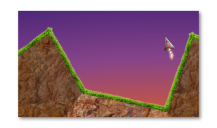
A small experiment written while teaching about game coding. It's using Box2DWeb for physics and the HTML
Canvas 2D API.
vminpoly
A polyfill for the newer CSS3 distance units and some media queries.